

When an alert says a cryptocurrency is surging, ask where the move happened and how it was calculated before focusing on the percentage. A thin market on one exchange—or prices quoted in different currencies—can look like a market-wide move when it is not.
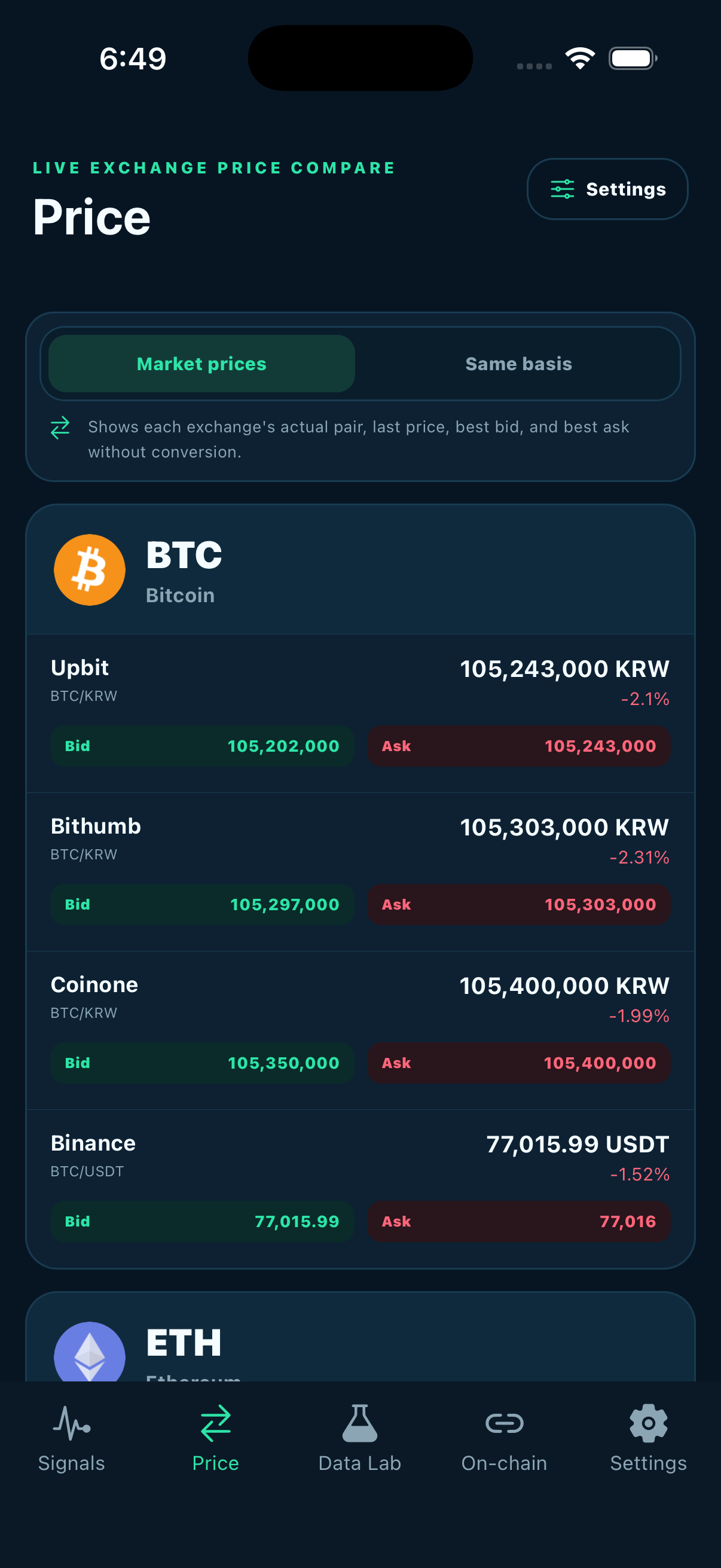
Prices across 11 exchanges
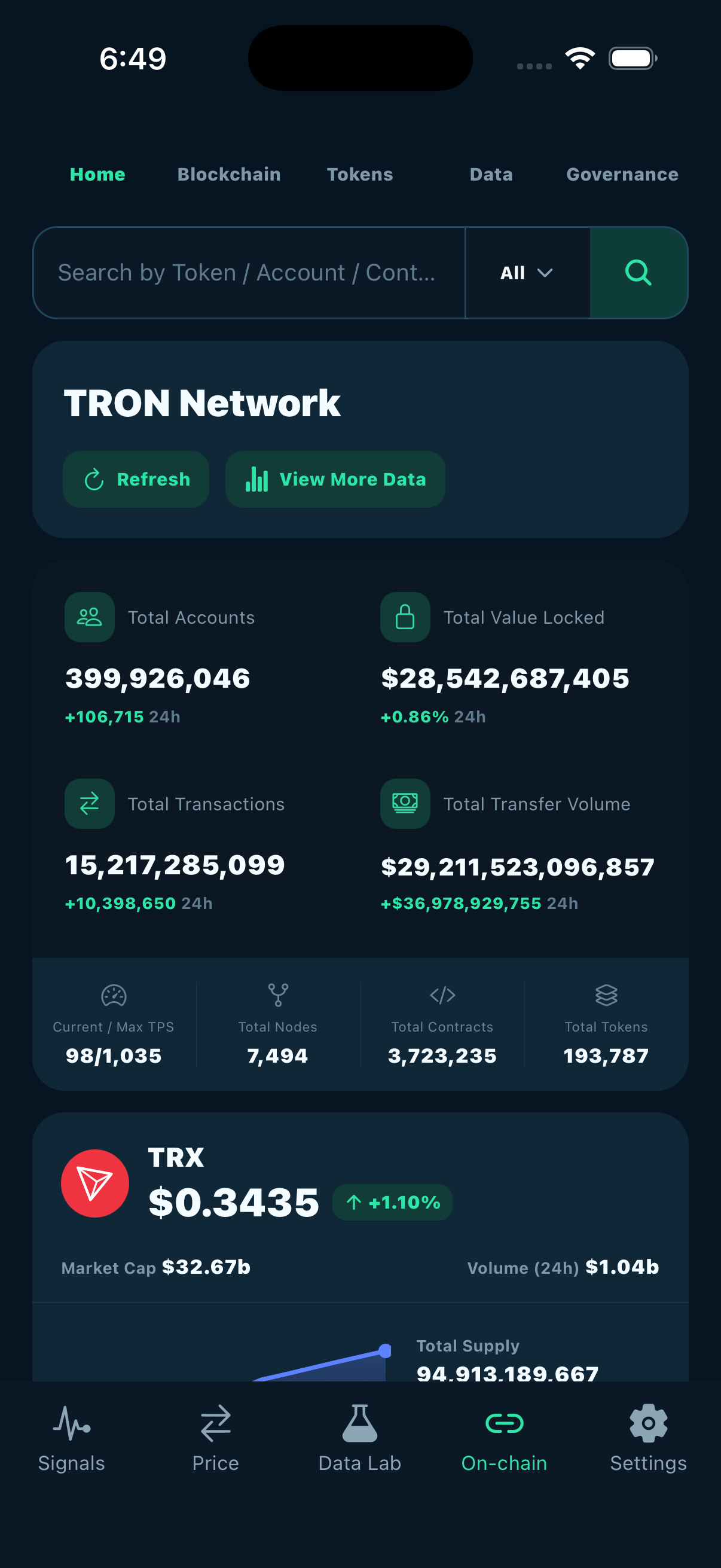
TRON on-chain data
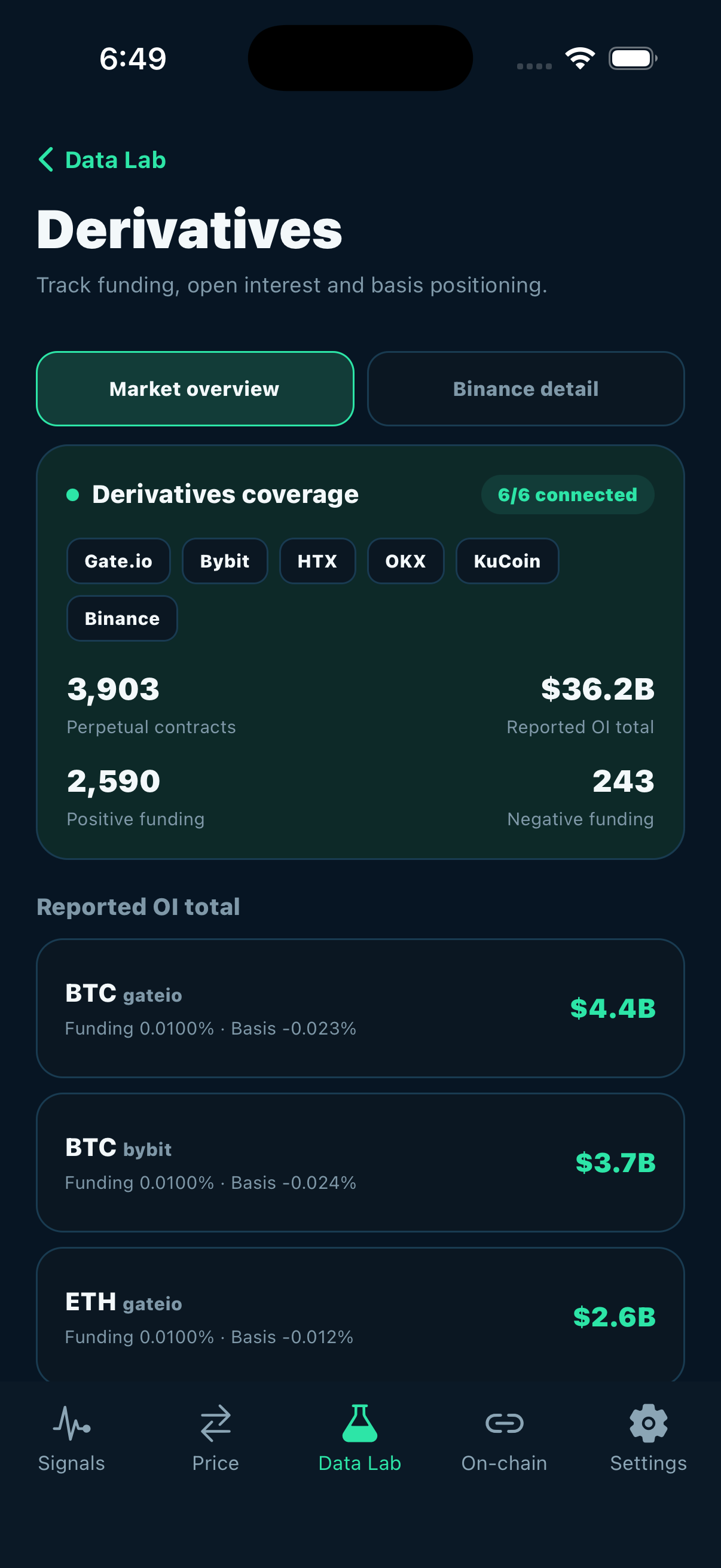
Derivatives market data
Compare prices on a common quote
BTC/KRW and BTC/USDT are not directly comparable. Even USD, USDT, and USDC markets may use different conversion assumptions. A useful comparison separates each exchange's original market price from its normalized comparison price and discloses the quote, source market, and comparison market.
Count independent confirmations
A five-minute move on one exchange may be a temporary trade or shallow liquidity. The same direction appearing across independent exchanges is stronger evidence that the move is spreading.
Do not stop at up 3.2%. Check:
- how many exchanges actually confirmed the signal;
- normalized price changes on each exchange;
- whether volume and trade intensity increased with price;
- the exact measurement window.
Inspect the denominator behind volume multiples
A volume multiple is useful only when its baseline is stable. Subtracting snapshots of cumulative 24-hour volume is not automatically equivalent to real five-minute volume. A near-zero previous interval can also inflate the multiple. Compare equal-length intervals, require meaningful minimum volume, and disclose how many markets contributed.
Treat a signal as a starting point
A market signal is not a trading conclusion. Cross-check market breadth, RSI, volatility, spreads, funding rates, and open interest. Missing values should remain missing rather than being filled with invented estimates.
Smart Coin's 11-exchange price comparison and market signals expose the comparison quote and confirming-market count, alongside Data Lab, derivatives, and TRON network views.
The app is available on the App Store and Google Play. Its content is general market information, not investment advice.